
Gear
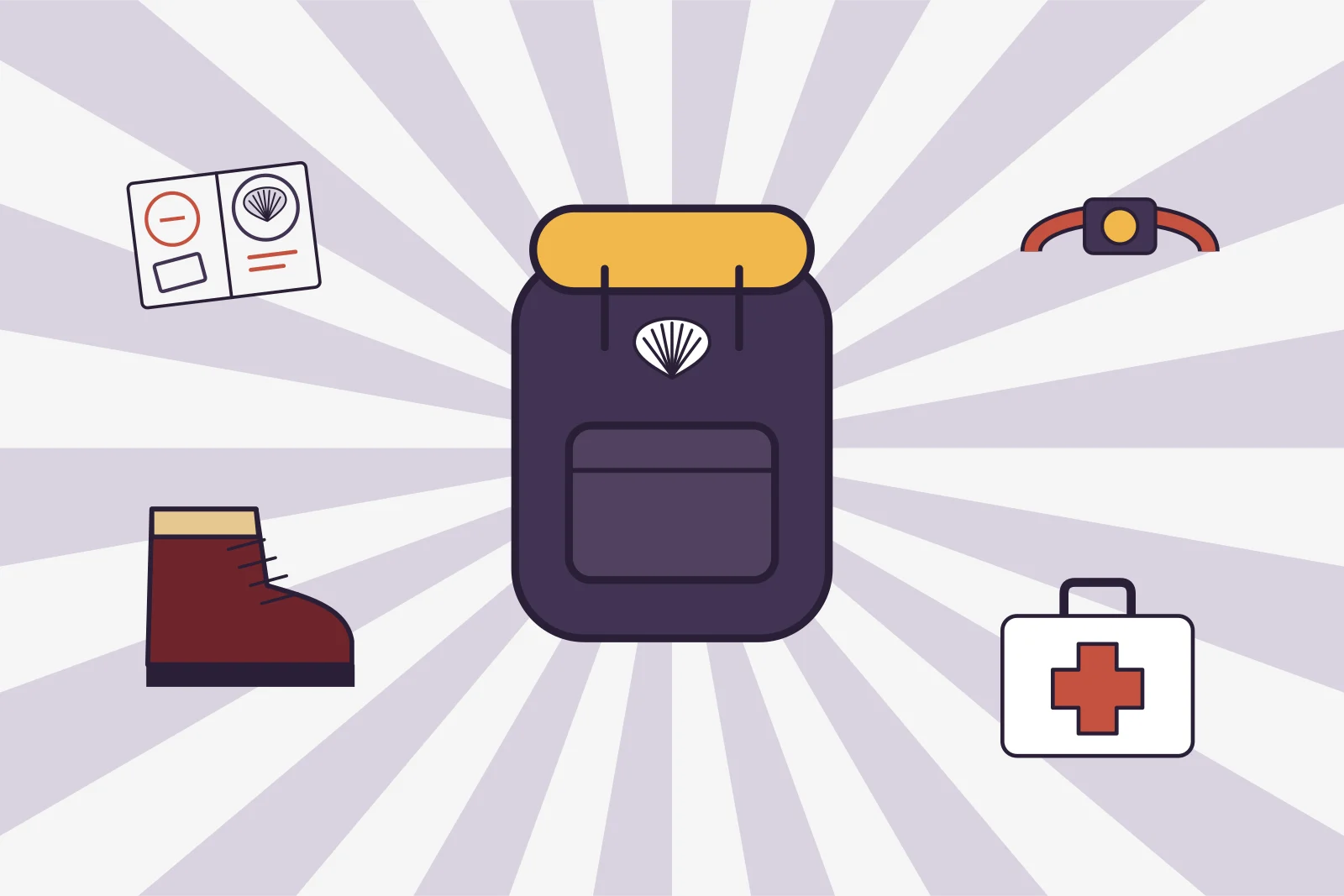
In short: As a rule of thumb, no more than ten percent of your body weight without water and food. At 70 kilograms, that is around seven kilograms.
The art of packing is finding the compromise between light luggage and enough gear. Most pilgrims take far too much the first time, and they soon pay for it: every kilo costs strength that you will miss at the end of the day's stage.
The packing list below is a suggestion. Only take what makes sense for you.
Pilgrimage packing list
Basics
- Comfortable hiking boots, well broken in
- Well-fitting backpack with hip belt, 30 to 40 litres
- Rain jacket or poncho
- Hiking trousers and two tops to change into
- Three pairs of hiking socks
- Light sleeping bag
- Water bottle
- Quick-drying towel
- Headlamp
- Pocket knife or camping cutlery
First aid kit
- Blister plasters and normal plasters
- Dressings
- Wound ointment
- Sunscreen
- Your own medication
Documents and tech
- ID card or passport
- Health insurance card
- Debit or credit card
- Pilgrim passport
- Phone with charger
If you have room
- Rain trousers
- Sunglasses and hat
- Light shoes for the accommodation
- Walking poles
- Diary
- Light sleeping mat, if you also want to sleep outdoors
The list is also available as a PDF to tick off.
What can stay at home
Leave just-in-case items at home. A second pair of trousers, a big book or a full toiletry bag can easily weigh more than a kilo. Along the major pilgrimage routes you can get almost anything you turn out to need in pharmacies and small shops.
Pack your backpack once as a test and go for a full day's walk with it. Afterwards you will know exactly what can go. The costs play a part too: you don't need expensive specialist gear, but good shoes and a well-fitting backpack are worth paying for.
Frequently asked questions
How heavy should your backpack be on a pilgrimage?
As a rule of thumb, no more than ten percent of your body weight without water and food. At 70 kilograms, that is around seven kilograms.
What are the best shoes for the Way of St James?
The ones you have broken in well. Many pilgrims take light hiking boots or trail runners, half a size to a full size larger than usual, because your feet swell on the way.
Do I need a sleeping bag?
Yes, as albergues usually only provide a mattress with a disposable cover. In summer a light sleeping bag or sleeping bag liner is enough.