
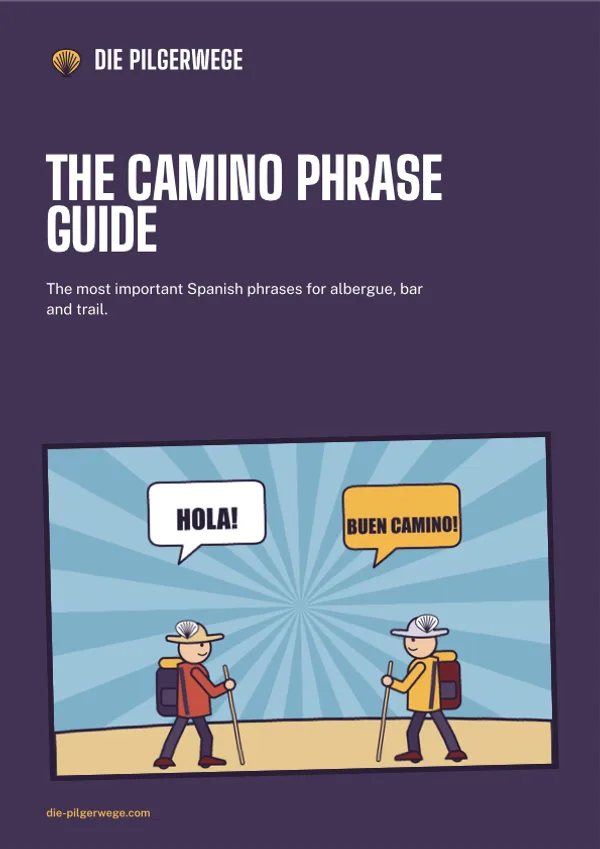
The Camino phrase guide
The most important Spanish phrases for albergue, bar and trail.
In short: No. English and a few Spanish phrases are enough for albergues, food and asking the way. In the countryside, though, not everyone speaks English.
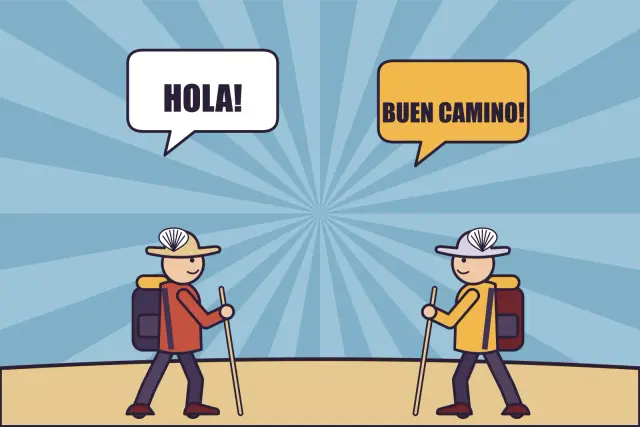
On the Way of St James a few phrases go a long way, and even a friendly “Hola” opens doors. You don't need to speak Spanish to get a bed or a dinner. But if you know the key phrases, things are much easier, especially in small villages where hardly anyone speaks English.
Our phrase guide fits on one page. Print it out and put it in your pocket. It weighs nothing and needs no battery.
Why a little Spanish helps so much
In the big cities and on the Camino Francés you can often get by in English. Away from these it gets harder. The people you need most on the way, such as the hospitaleros in small albergues, the landlady of the village bar or the pharmacist, often speak only Spanish or Galician.
People also treat you differently if you try. A sentence of accented Spanish shows respect, and the response is nearly always warm.
The most important phrases to start with
A small selection from the PDF:
| Spanish | English |
|---|---|
| Buen Camino | Have a good Camino |
| ¿Hay una cama libre? | Is there a free bed? |
| ¿Me puede sellar la credencial? | Can you stamp my pilgrim passport? |
| Un café con leche, por favor | A white coffee, please |
| La cuenta, por favor | The bill, please |
The PDF has more phrases for the albergue, the bar and the trail, and for the pharmacy and emergencies.
At the albergue
The first question of the day is usually: is there still a bed? “¿Hay una cama libre?” will get you a long way. Have your pilgrim passport ready, as the credencial gets stamped there. If you want to know more about how things work, you will find our albergue etiquette guide useful.
Ask about closing time too. Many albergues lock the door in the evening, and if you come back too late you are left outside.
At the bar and at meals
The pilgrim menu is called “menú del peregrino”. If you are vegetarian, say “sin carne, por favor”, and look out for tuna in the salad. At fountains, also check whether the water is safe to drink: “agua potable” means yes, “no potable” means no. There's more on this under food on the Way of St James.
If something happens
At the pharmacy, “farmacia” in Spanish, two phrases will help: “Tengo una ampolla” for a blister and “Me duele aquí” when you point to the spot. The European emergency number is 112 everywhere, and English is often spoken there too.
Learning before you go
Do you still have a few weeks? Then learn for five minutes a day. Say the phrases out loud, as that helps them stick. Also load a translation app with an offline language onto your phone.
Asking the way
On the major routes yellow arrows guide you, so you rarely need to ask. Sometimes, though, you lose the waymarking, or a village has moved its path. “¿Dónde está el albergue?” asks where the albergue is. “¿Cuántos kilómetros faltan?” means: how many kilometres are left? In the countryside, it's best not to take the answer too precisely.
Directions are useful too: “derecha” means right, “izquierda” left and “todo recto” straight ahead. If someone answers in Spanish, watch their hands, which often explain more than words. There are notes on the waymarks under scallop shell and yellow arrow.
Numbers, times and prices
You hear numbers every day, in the bar and in the albergue. Learn at least one to ten and the tens. “Uno, dos, tres, cuatro, cinco, seis, siete, ocho, nueve, diez” will do for most things, plus “veinte” for twenty. For times, “a las ocho” is the form for “at eight o'clock”.
Small words with a big effect
Sometimes three words are enough. “Hola” for hello, “gracias” for thank you and “por favor” for please open most doors. “Perdón” is sorry, and “buenos días” works until midday. From the afternoon it's “buenas tardes”, and later “buenas noches”.
In Spain people say hello when they walk into a bar or a shop, and a “Buen Camino” is part of life on the way. Locals often say it without being asked, so take it as a small gesture. If you greet them back, you are already halfway there.
Galician and Basque on the way
In Galicia you will see many signs in Galician, which is similar to Portuguese. In the Basque Country and Navarre you will come across Basque, which has nothing to do with Spanish. Don't worry: almost everyone there understands Spanish. Even so, everyone likes hearing thanks in the local language, for example “eskerrik asko” in Basque or “grazas” in Galician.
On the Camino Portugués you need some Portuguese as far as the border. Men say “obrigado”, women “obrigada”, and “bom caminho” is the pilgrim greeting. In France “bon chemin” helps, and on the Via Francigena in Italy “buon cammino”.
Talking to other pilgrims
People from all over the world meet on the way, and English is the common language. Even if it's bumpy, nobody expects perfection. Many friendships start with gestures and a shared plaster. If you walk alone, language helps you connect quickly.
Getting the most from the phrase guide
Print the page out and put it in a clear plastic sleeve, as rain is paper's worst enemy. Or save the PDF on your phone. Also write down your allergies or medication in Spanish. That helps more at the pharmacy than any phrase. Take a look at the packing list beforehand too, so there is still room for the phrase guide.
What's in the PDF
- Phrases for albergue, bar, trail and pharmacy
- To print out and take with you
- Emergency number and key words
For anyone who doesn't speak Spanish and would still like a bed and a dinner. The PDF has 2 pages and prints well.
How to get the PDF
Enter your email address and confirm your sign-up using the link in the first email. We will then send you the link to the PDF by email. You can unsubscribe from the newsletter at any time.
Frequently asked questions
Do I need to speak Spanish for the Way of St James?
No. English and a few Spanish phrases are enough for albergues, food and asking the way. In the countryside, though, not everyone speaks English.
What does Buen Camino mean?
Buen Camino means have a good Camino. It is the greeting pilgrims exchange on the Way of St James with each other and with local people.
What is the Spanish word for pilgrim hostel?
Albergue. To ask for one, say: ¿Dónde está el albergue?
How do I ask for a stamp?
¿Me puede sellar la credencial? This means: can you stamp my pilgrim passport?
What do I say at the pharmacy?
Tengo una ampolla means: I have a blister. With Me duele aquí you show where it hurts.
Is a translation app enough?
For most people yes, if the language is saved offline. On paper you still have the key phrases when your battery is flat.
Request it now for free
The most important Spanish phrases for albergue, bar and trail.